Good news at Tharisa
Sustainability as an operational discipline: How Tharisa is shaping a more resilient energy future

Sustainability at Tharisa is part of how the business operates. It is defined by clear targets, supported by measurement and delivered through practical initiatives that strengthen resilience and long-term performance.
In a sector where operating conditions are volatile and resource intensity is high, this approach ensures that sustainability is not treated as an abstract goal but as a disciplined way of managing the business.
Targets that set direction
Tharisa has committed to reducing its carbon footprint by 30% by 2030. This target provides a clear line of sight for operational decisions, particularly in how energy is sourced, how emissions are managed and how environmental performance is improved over time.
It also reinforces accountability. Progress is measured against a defined outcome, not general intent.
Measurement that drives accountability
Operational discipline depends on visibility. Tharisa tracks key environmental indicators, including energy consumption and Scope 1 emissions, to monitor performance and identify opportunities for improvement.
This ensures that sustainability is embedded in daily operations. Performance is reviewed, adjustments are made, and improvements are implemented as part of standard operating practice.
Energy as a driver of operational resilience
Energy is one of the clearest areas where sustainability and operational resilience intersect. In southern Africa, electricity supply is constrained, with ongoing reliability challenges, limited generation capacity and rising costs placing sustained pressure on energy-intensive operations.
For mining businesses, this creates two immediate risks: disruption to production and reduced certainty in operating costs.
Tharisa’s energy strategy responds directly to this environment. The focus is on diversifying supply, improving stability and increasing predictability in energy costs over time.
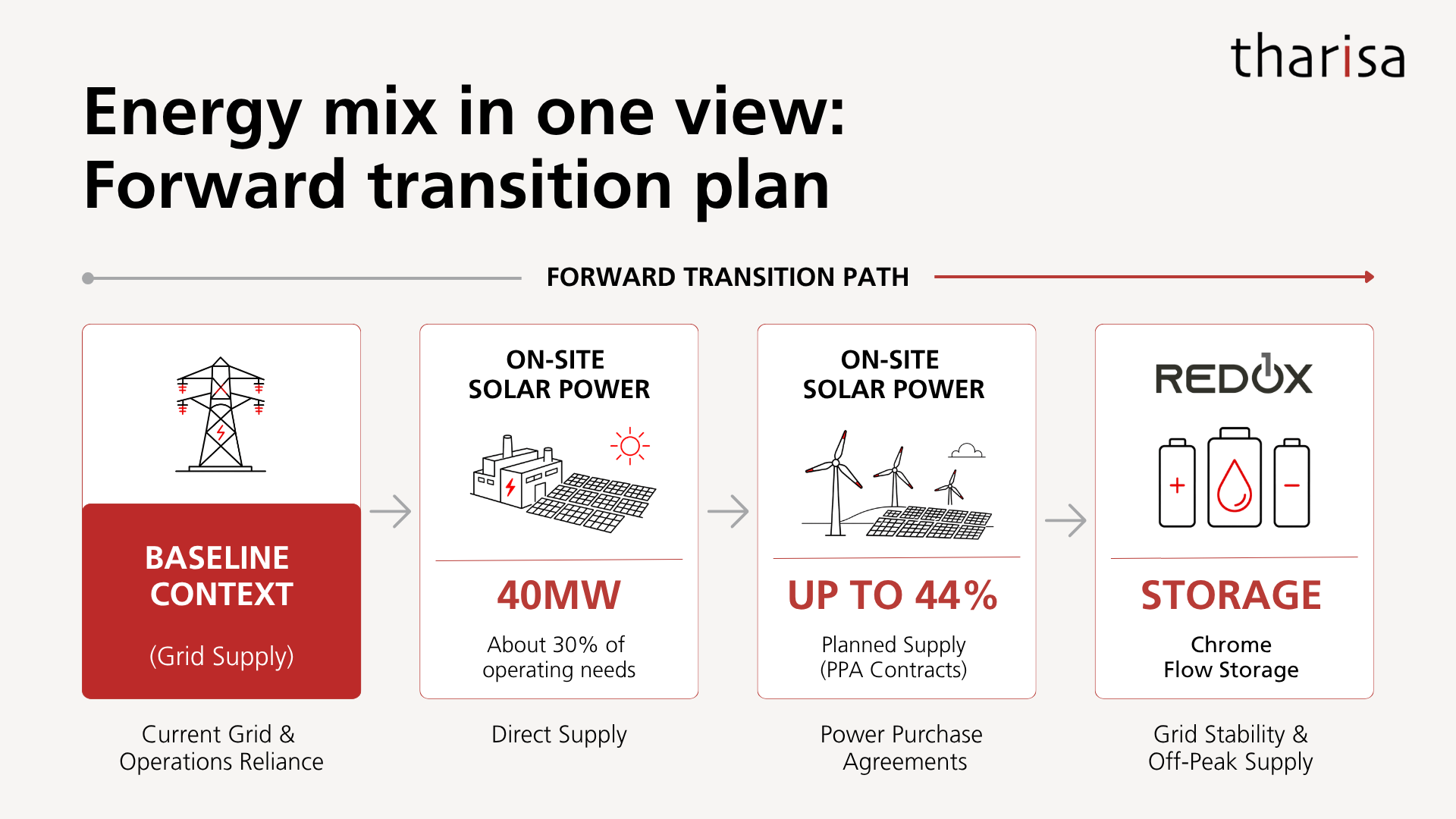
A defined transition in the energy mix
The planned evolution of Tharisa’s electricity supply reflects a structured shift towards a more resilient and balanced model:
- FY2023: 100% Eskom supply
- FY2024 Q4: 63% Eskom and 37% solar
- FY2025 Q4: 9% Eskom, 37% solar and 53% wheeled renewable energy
This progression reduces reliance on a single supplier while increasing the contribution of renewable energy.
How this shift is being delivered
Two key initiatives underpin the transition:
Wheeled renewable energy
A 15-year power purchase agreement with Etana Energy will supply renewable electricity through the national grid from 2026, introducing a significant new energy source into the mix.
On-site solar generation
Solar generation at the operation provides a direct and reliable source of electricity, reducing dependence on grid supply and supporting more stable operations.
Together, these initiatives address both reliability and cost. They reduce exposure to supply constraints and introduce greater certainty in long-term power costs.
Strengthening reliability through storage
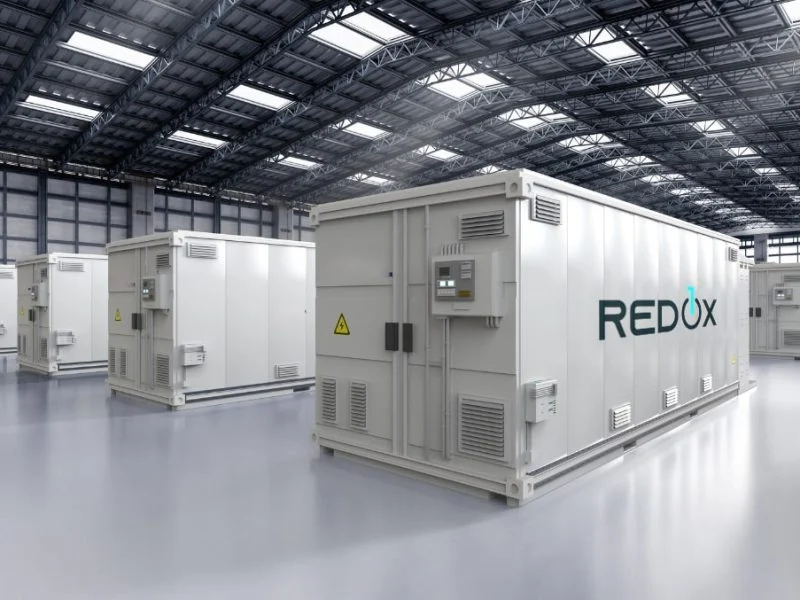
As renewable energy becomes a larger part of the energy mix, reliability becomes increasingly important. Tharisa is advancing this through its “mine to megawatt” initiative, linked to Redox One.
The development of a chrome-based redox flow battery provides a practical solution for storing excess solar energy and supporting a consistent supply. This ensures that renewable generation is complemented by the ability to use that energy effectively.
Building resilience through execution
Sustainability at Tharisa is defined by execution. Targets provide direction. Measurement ensures accountability. Operational initiatives deliver tangible change.
This approach strengthens the business in a constrained operating environment. It improves energy security, supports cost management and builds confidence through visible progress.
The result is a model where sustainability is not an aspiration, but a disciplined way of operating that delivers measurable outcomes over time.